Whole, Crushed or Powder? How to Write Particle Size and Seed Content for Beijing Red and Red Dragon 23

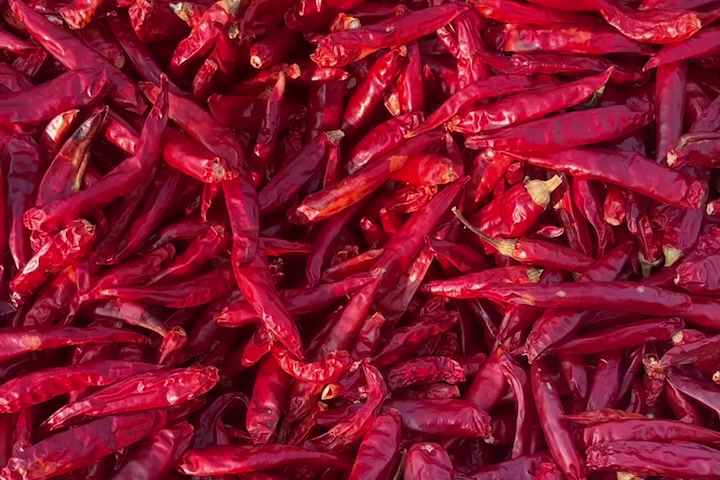
Photograph of whole dried red chili already published on the Changfeng Agro website. A photo of whole pods does not define particle size or seed content; those still need to be written into the inquiry when the same variety is supplied as crushed chili, flakes or powder.
Many inquiries name “Beijing Red” or “Red Dragon 23 and give a color or heat target, but describe the goods only as “crushed chili or “powder.” Two lots of the same variety can show similar ASTA and SHU results and still run very differently in chili oil, a sauce or a dry blend, because the particle size and the amount of seed are not the same. This guide explains how to write those two points into the inquiry, so the sample, the quotation and the shipment refer to the same material.
Why particle size and seed content matter
Appearance and texture. Visible flakes in chili oil or on a topping are not the same product as a fine powder in a seasoning blend, even when the variety is the same.
Color and heat balance. Seeds add heat but little red color. A high-seed crushed lot can test hotter and look paler than a seed-reduced flake of the same variety.
Process behavior. Mesh and cut size affect flow, dust, sieving and how evenly the chili disperses in oil, sauce or a dry mix.
What you are actually buying. A variety name describes the raw material. Particle size and seed content describe the ingredient that arrives at your plant.
How to specify each product form
| Product form | What to specify | Typical use | What to write in the inquiry |
|---|---|---|---|
| Whole pods | Stem-on or stemless; length range if it matters | Retail packs, later cutting or milling | Whole-pod terms do not replace a particle-size line if you will later buy crushed or powder |
| Segments / cut chili | Cut size range in mm | Chili oil, hot pot, visible pieces | State whether seeds remain in the segments |
| Crushed chili / flakes | Particle size range (mm or sieve) and, if needed, a limit for fines or dust | Chili oil, pizza topping, sauces | Do not treat “flakes” and “crushed” as the same unless the size range is agreed |
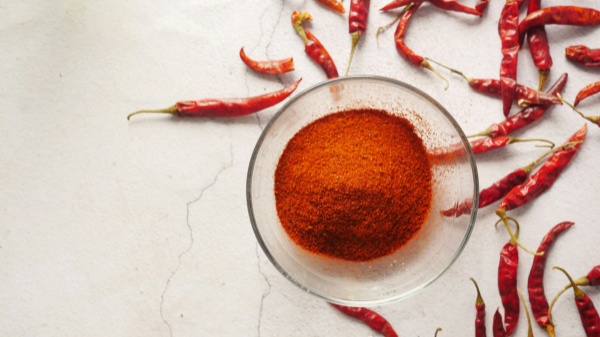
| Powder | Mesh range and the sieve standard you use | Seasoning blends, snack coatings, sauces | Confirm the mesh on the sample you will approve |
The numbers belong to the buyer and the application. A variety name does not fix a mesh or a seed percentage. Changfeng Agro’s published Red Dragon 23 profile lists powder, flakes, crushed, segments or whole as available forms, and notes that powder granulation can be discussed from a coarser cut through a finer mesh such as 40–80 mesh. Those are starting points for discussion, not a lot guarantee. Beijing Red should have its form and particle size confirmed in the same way, rather than copied from another variety’s data sheet.
Seed content: use a measurable limit
Words such as “with seeds” or less seeds” cannot be checked on arrival. In the inquiry, state one of the following and give a number where it applies:
Seeds in: seeds remain with the flesh, as in many crushed and whole-pod lots.
Seeds reduced / seeds out: give a maximum seed content as a percentage by weight, and say whether it is measured on the finished crushed, flake or powder.
Loose seeds in whole pods: if you buy whole chili, set a separate limit for seeds that have already separated in the bag. This sits alongside visual grading, not in place of it.
If seed content affects your color or heat target, say so, and approve it on the same sample you use for ASTA and SHU.
How to write it into the inquiry
A clear line names the variety, the form and the two physical limits together. For example:
“Beijing Red, stemless, crushed 3–5 mm, seeds in, plus your ASTA, SHU and moisture limits.”
“Red Dragon 23, powder, mesh range as agreed, seed content max. __ % by weight, moisture max. __ %.”
Then add the items that still belong in every chili inquiry: end use, color method (for example ASTA 20.1), heat method (SHU or HPLC / AOAC 995.03 where you require it), moisture and test method, foreign-matter limits, destination-market food safety documents, packing and quantity.
Approve the sample in the form you will buy
Ask for a 200 g sample in the exact form of the order. A whole-pod sample does not represent crushed chili or powder of the same variety, because cutting, milling and screening change particle size, seed distribution and sometimes the way color and heat show up in the finished ingredient. Keep a retained portion of the approved sample. The batch COA should identify the same variety and form, and should be checked against the agreed particle size or mesh, seed content where specified, plus color, heat and moisture.
A free 200 g sample is available, with freight paid by the buyer. Final specifications are confirmed per batch.
FAQ
Can I approve a whole-pod sample and then order crushed chili or powder of the same variety?
Not as a substitute. Process the trial in the form you will purchase, or ask for a sample already in that form, and lock those results in the contract specification.
Is “chili flakes” a sufficient specification?
No. Flake size and seed content vary widely from one supplier and one lot to another. Give a particle size range (and a fines limit if you need one), give a seed-content limit, and confirm both on the sample.
Request a sample in the form you need
ChangFengAgro is a chili and spice supplier based in Jiaozhou, Shandong, supplying dried chili, paprika and spice ingredients to food manufacturers, importers and private label buyers. To discuss Beijing Red or Red Dragon 23 as whole pods, crushed chili, flakes or powder, send us your end use, particle size or mesh, seed-content requirement and other target specifications.
Website: cfmagro.com
Email: [email protected]
Phone / WhatsApp: +86 13355329772
Address: 200 Meters West of Provincial Highway S219, Jiaolai Subdistrict, Jiaozhou City, Shandong Province, China