Crushed Chili Microbiology Specs: TPC, Mold, Salmonella
For crushed chili and chili powder, write microbiology into the inquiry as named tests with limits and units: total plate count, yeast and mold, coliforms or E. coli, and Salmonella. Also say whether you need the lot steam treated, because that decides what limits a supplier can realistically quote. A line like "microbiology OK" or "meets EU standard" gives neither side anything to test against.

Why does ground chili need microbiology specs when whole pods often don't?
Beijing Red and Red Dragon 23 are dried outdoors or in dryers, so the pod surface carries soil and air-borne bacteria and mold spores. When the pods are crushed or milled, that surface load is spread through the whole product. Crushed chili and powder also tend to go straight into seasonings, dips and ready-to-eat foods with no cooking step after them. That is why buyers of whole pods for chili oil or hot pot base, which are fried or boiled, often skip microbiology, while buyers of flakes and powder almost always ask for it.
Mycotoxins, Sudan dyes and pesticides are a separate set of tests. We covered those in aflatoxin and Sudan dye terms for dried chili inquiries.
Which microbiology items should the inquiry list?
The table below shows the items buyers usually request and how to phrase them. The limits are the buyer's to set, based on their own regulator and finished product. The examples are typical requests, not test results for any particular lot.
| Test item | What it tells you | How to write it (example) |
|---|---|---|
| Total plate count (TPC / aerobic plate count) | Overall bacterial load; the clearest sign of whether the lot was treated | "TPC ≤ 1 × 10⁵ cfu/g" |
| Yeast and mold | Storage and drying hygiene; high counts often go with moisture problems | "Yeast and mold ≤ 1 × 10³ cfu/g" |
| Coliforms or E. coli | Hygiene during handling and processing | "E. coli < 10 cfu/g" |
| Salmonella | Pathogen; the item most often behind spice recalls | "Salmonella absent in 25 g" |
| Bacillus cereus, Clostridium perfringens (optional) | Spore-formers, asked for by some sauce and meat-product makers | Set only if your QA team uses them |
Name the test method or standard (for example ISO methods) and the lab basis together with the limits. A TPC limit without a method is easy to argue about when the arrival test comes back different.
Does the lot need to be steam treated?
Natural, untreated crushed chili usually cannot meet a tight TPC limit. If your finished product is ready-to-eat, or your customer has a low TPC requirement, ask for a steam-treated lot and say so in the inquiry. Steam treatment adds a processing step and some moisture that has to be dried off again, so it affects the price and the lead time.
Steam treatment is also gentler on the product than many buyers expect, but it is still worth checking color after treatment. If ASTA color matters to you, ask for the color result to be measured after treatment, not on the raw material. For how color and heat differ between the two varieties, see Beijing Red and Red Dragon 23 compared.
Some markets restrict other treatments. Irradiation and ethylene oxide, for example, are restricted or banned for spices in the EU, so if you sell there, write "no irradiation, no ethylene oxide treatment" into the contract as well.
How do particle size and moisture affect the result?
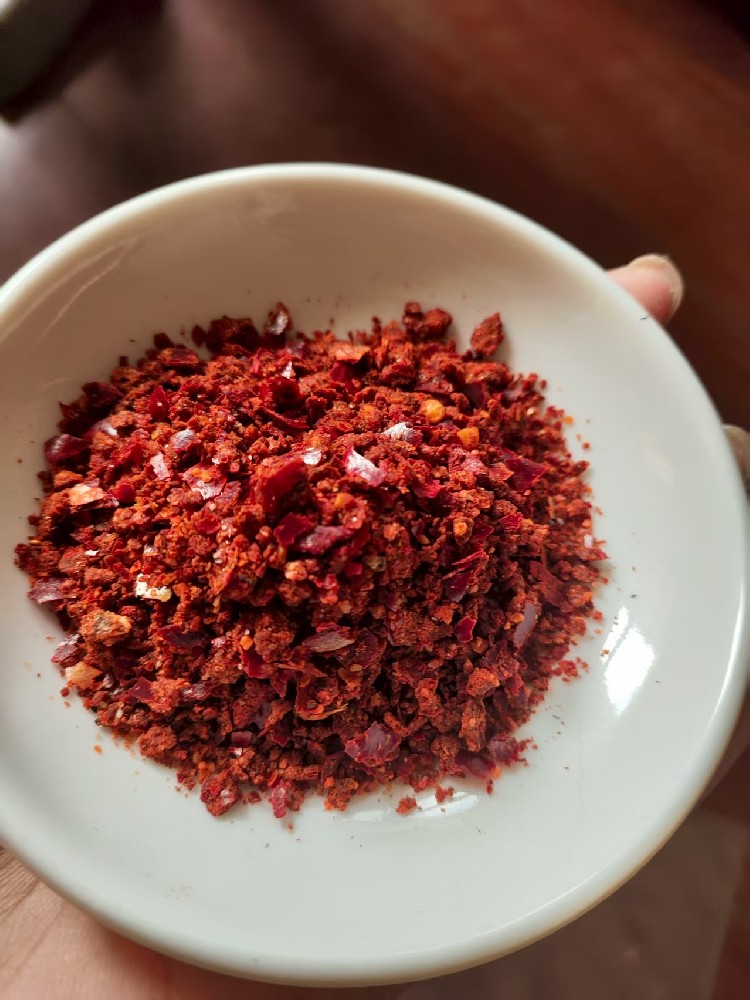
Finer powder has more surface area and is harder to keep clean once it is milled, so the order of operations matters: treat first, then mill and pack in a clean area. When you write the particle size for flakes or powder (see how to write particle size and seed content), add the microbiology limits next to it so they apply to the final form you receive.
Moisture is the other link. Dried chili kept above its safe moisture level lets mold grow in storage even after a clean test at loading. Our article on dried chili moisture and storage requirements covers how to write that part.
How should the results be tied to the shipped lot?
Ask for the microbiology results to carry the same lot number as the COA, bag labels and packing list, and for a sealed retained sample from that lot. The Red Dragon 23 COA checklist lists the other fields to compare. If you plan your own arrival test, agree in advance how the sample is drawn and which result counts if the two labs disagree.
FAQ
Is microbiology needed for whole dried chili?
Often not, when the pods are cooked in oil or broth by the buyer. If whole pods are sold to consumers or milled by the buyer for ready-to-eat use, add at least Salmonella and yeast and mold.
Do Beijing Red and Red Dragon 23 need different microbiology limits?
No. The limits depend on the product form, treatment and end use, not on the variety. The variety choice is about color, heat and pod shape, as explained in choosing Beijing Red or Red Dragon 23 by application.
About ChangFengAgro
ChangFengAgro is a chili and spice supplier in Jiaozhou, Shandong, China. We supply Beijing Red and Red Dragon 23 dried chili, crushed chili, chili powder, paprika and other spices to food manufacturers, importers and private-label buyers. Send us your product form, target market and microbiology limits, and we will tell you what can be quoted and which documents come with the lot. Email [email protected] or WhatsApp +86-13355329772.