Dried Chili Sample Approval: Beijing Red, Red Dragon 23
A dried chili sample only helps if both sides agree what it stands for: the variety, the product form, and whether it is a type sample or a draw from the lot that will actually ship. For Beijing Red and Red Dragon 23, put those points in the sample request, test the sample against the same specification you will write into the contract, and keep a retained portion so later bags can be compared with what you approved.

What should a dried chili sample request include?
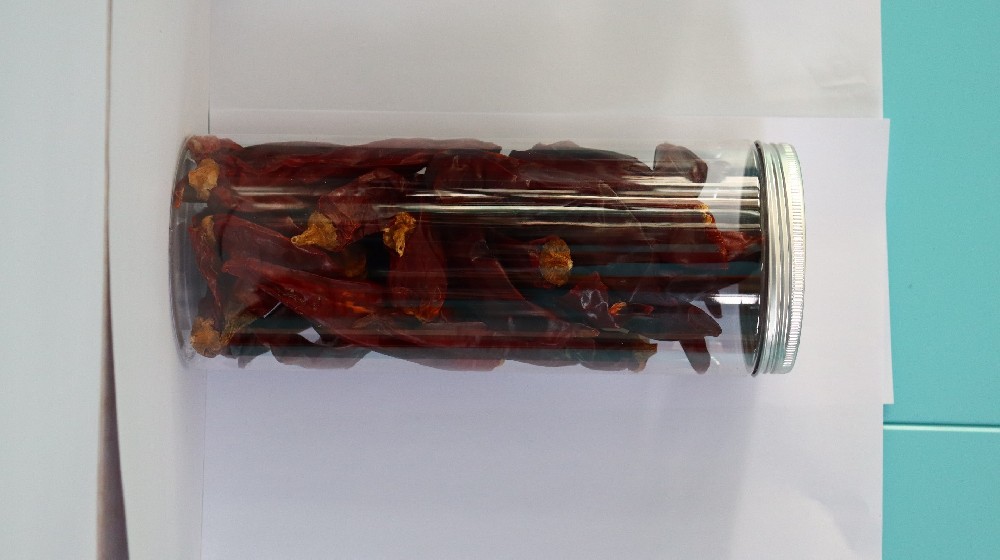
Name the variety in English and Chinese where you can: Beijing Red (北京红) or Red Dragon 23 (红龙23). Then state the product form — whole stem-on, whole stemless, crushed, flakes or powder — and the end use, because a pod that looks right on the table may not be the right cut for chili oil or a seasoning blend. Our note on choosing Beijing Red or Red Dragon 23 by application explains why the end use belongs in the request, and stem-on versus stem-removed Red Dragon 23 covers the stem decision for whole pods.
Also give the sample weight you need. There is no single official size; ask for enough material for your laboratory tests, a short production trial and a sealed retained portion. If you will run ASTA, moisture, microbiology or a pesticide screen, say so in the request so the sample is packed and labelled as a reference, not as a handful of loose pods.
How is a type sample different from a lot sample?
A type, or reference, sample shows what the supplier can offer. It is useful when you are still choosing between Beijing Red and Red Dragon 23, or agreeing a colour and heat target. It does not, by itself, approve a later lot from a different crop or a different packing run.
A lot sample, sometimes called a pre-shipment sample, should be drawn from the bags that will ship and should carry the same lot number that will appear on the COA and on the bag marks. If those three references do not match, you cannot tie a complaint back to the sample you approved. The Red Dragon 23 COA checklist and the note on bag marks, liners and labels set out the fields that need to line up.
What should you check when the sample arrives?
Check the sample against the written specification, not only against a photograph. The table below is a checklist of questions, not a published specification for either variety. Changfeng Agro’s public Red Dragon 23 profile gives typical colour of 160–220+ ASTA and typical pungency below 5,000 SHU as positioning figures, not a guarantee for every lot. Beijing Red should have its own numeric targets confirmed, rather than copied from that profile. Variety, colour and form are compared in Beijing Red and Red Dragon 23: colour, heat and product form.
| Check | Why it matters | What to record |
|---|---|---|
| Variety and form | A whole-pod sample does not represent crushed chili or powder of the same variety | Variety name, form, stem condition, mesh or cut size |
| Colour | Both varieties are often bought for red colour; a visual check alone is hard to enforce later | Target ASTA range and method (ASTA 20.1) |
| Heat | The same lot can look similar and still run hotter or milder in a sauce | Accepted SHU or capsaicinoid range, and the method (HPLC / AOAC 995.03 where the contract requires it) |
| Moisture | Moisture affects mould risk, colour hold and how the product mills | Maximum moisture % and test method, as in dried chili moisture and storage requirements |
| Appearance and defects | Broken pods, stems, discoloured fruit and loose seed change yield and visual grade | Limits agreed in visual defect grading and stems and foreign matter |
| Particle size and seed content | These decide how crushed chili and powder behave in oil, sauce or a dry blend | Mesh or mm range and seed % by weight; see how to write particle size and seed content |
| Odour and application trial | Mustiness or an off-note will not show up in an ASTA figure | Whether the sample is accepted for the intended line after a small trial in your oil, sauce or seasoning |
Run the application trial on the form you will actually buy. A clean whole-pod sample can still disappoint once it is crushed or milled, because cutting changes the mix of pericarp, seed and fines.
How do you write the approval so the shipment can be matched?
A useful approval is short and specific. It should record the sample reference, the date you received it, the results you accept, and the tolerances that will apply to the bulk lot. Seal and label a retained portion of the same sample, and store it so a pre-shipment draw can be compared with the same physical reference, not only with a laboratory sheet.
Write the approval as applying to that sample, and to later lots that match it within the stated tolerances. Do not approve “Beijing Red” or “Red Dragon 23” in general. If the next offer comes from a new crop year, treat it as a new sample unless you have agreed otherwise in writing.
Which documents should be agreed at the sample stage?
Ask for the documents you will need on the bulk lot while you are still looking at the sample, not after the container is booked. Typical items are a pre-shipment COA for the parameters in your specification, the lot number on each bag, packing details, and any destination tests you require, such as aflatoxin and Sudan dye, or microbiology for crushed chili and powder. Those two topics are covered in aflatoxin and Sudan dye terms and crushed chili microbiology specs. The chili RFQ checklist is a useful place to put the same points so competing quotes stay on one basis.
FAQ
Can one approved sample cover several orders?
It can stay the visual and sensory reference, but each new lot or crop year still needs its own COA. Colour and heat move with the harvest, so the approved sample sets the target, and the lot documents show whether that target was met.
Should I approve a whole-pod sample if I will buy crushed chili or powder?
Use the whole pods to judge raw material, then approve a sample in the form you will receive. Cutting and milling change particle size, seed content and, in some cases, the laboratory colour result. The shipment should be compared with the approved form, not with a pod sample of the same variety name.
About ChangFengAgro
ChangFengAgro is a chili and spice supplier in Jiaozhou, Shandong, China, supplying Beijing Red and Red Dragon 23 dried chili, crushed chili, chili powder, paprika and other spices to food manufacturers, importers and private-label buyers. Send the variety, product form, sample weight and the tests you will run, and we will prepare a sample against that request. Email [email protected] or WhatsApp +86-13355329772.