Dried Chili Pesticide MRLs: How to Specify in Inquiries
A pesticide maximum residue limit (MRL) is a legal maximum for one substance on a named commodity in a named market, not a general judgement that the chili is “clean” or “EU standard.” Write the destination list, the Beijing Red or Red Dragon 23 form you will test, a multi-residue method and any single-residue tests a screen does not cover into the inquiry, and ask for the same results on the lot certificate of analysis (COA). A line that only says “meets EU MRLs” does not show which substances were tested, as the aflatoxin and Sudan dye note already points out.

What does an MRL actually apply to?
It applies to a specific pesticide, on a specific commodity, in a specific jurisdiction. In the European Union the framework is Regulation (EC) No 396/2005: a long list of substance-and-commodity pairs, not one number for “pesticides.” The United Kingdom, the United States, Japan, Codex and other markets each keep their own lists. Those lists are not interchangeable, and they are amended from time to time, so the current official database for the destination should be checked before the contract is signed.
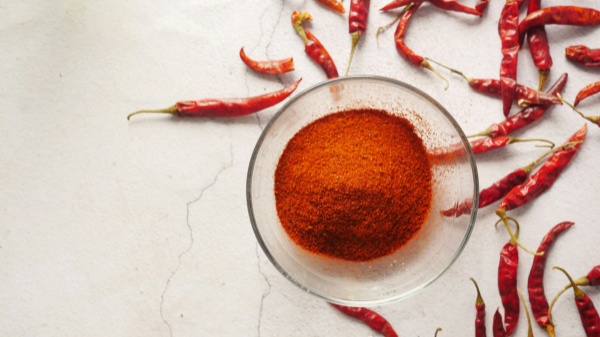
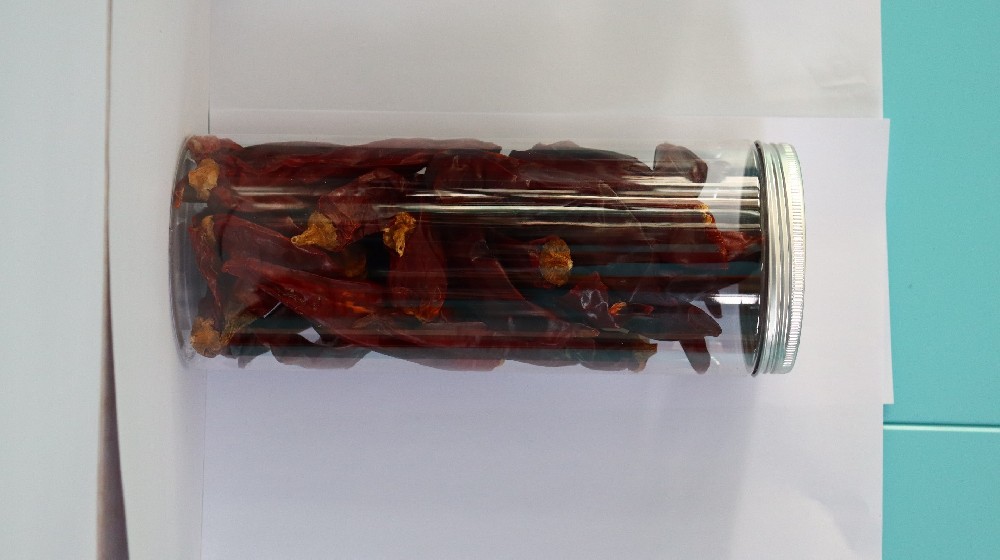
The commodity entry matters as much as the destination. A limit written for fresh peppers is not automatically the correct entry for dried chili, crushed chili or powder. Drying can also concentrate residues that were already present on the raw fruit, which is why the inquiry should name the form as shipped — whole pods, crushed chili, flakes or powder — rather than leaving the laboratory to guess. This article does not give a default drying factor; that factor, if you use one, has to come from the rule or guidance that applies to your market.
Why is “meets EU MRLs” not enough on its own?
Because a pass is only a pass for the substances inside the method that was run. A multi-residue screen, usually by GC-MS/MS and LC-MS/MS, can cover a large panel, but it does not automatically include every residue a food manufacturer may need to document. Some substances require a dedicated single-residue method. Ethylene oxide is one example already flagged in the food-safety inquiry note; your destination list may add others. If the report only says “pass” or “meets EU MRLs,” you cannot see the scope or the limit of quantification (LOQ).
“Not detected” has the same problem unless the LOQ is stated. A result below a high LOQ is not the same as a result below the MRL you actually need to meet.
How should pesticide limits be written in the inquiry?
“Export quality,” “no pesticides” or “meets EU standard” cannot be checked on a COA. The table below is a writing checklist, not a published residue specification for Beijing Red or Red Dragon 23, and it does not quote official limits for individual substances.
| Field | What to write | Why it matters |
|---|---|---|
| Destination market | The list that applies, for example “EU MRLs under Regulation (EC) No 396/2005,” or the UK, US, Japanese or other list you will use | A generic “EU standard” line does not identify the list |
| Commodity and form | Dried chili as shipped: whole Beijing Red or Red Dragon 23 pods, crushed chili, flakes or powder | Fresh-pepper entries and dried-chili entries are not automatically the same |
| Multi-residue screen | The approach, usually a GC-MS/MS and LC-MS/MS multi-residue screen, plus the method scope or compound list | A “pesticide pass” with no scope cannot be reviewed |
| Single-residue tests | Any substance that must be tested by a dedicated method, such as ethylene oxide where your market requires it | A multi-residue screen does not automatically cover every residue of concern |
| Reporting basis | A full residue report with results and LOQ, not only the word “pass” | You need to see what was tested and at what quantification limit |
| Sample and lot | Approve a sample of the same variety and form, then repeat the tests on the shipment lot and put the results on the COA | The sample result is not the lot result unless they are the same lot |
Do Beijing Red and Red Dragon 23 need different residue clauses?
The legal list is set by the destination market and the commodity, not by the variety name. The same written clause can apply to both Beijing Red and Red Dragon 23 if the form and the destination are the same. Do not invent a tighter limit for one variety and copy it onto the other as if it were a published house specification.
What can change in practice is the origin and the harvest. A new growing area or a new crop year should be treated as a new sample, because the residue profile of last season’s lot is not a guarantee for the next one. The form also has to be stated: a whole-pod test is not a substitute for a later crushed or powder lot of the same variety, which should be specified and approved separately, as in the note on particle size and seed content.
Keep this clause next to the other food-safety terms, not folded into one phrase such as “food safety OK.” Mycotoxins and illegal dyes belong in the aflatoxin and Sudan dye note; plate count, mould and Salmonella belong in the microbiology specification.
Where should the residue result appear after the inquiry?
On the full laboratory report and on the certificate of analysis, with the same lot number that appears on the bag marks and the packing list. The sample approval note is the place to record which residue tests you accepted on the reference sample; on arrival, draw a receiving sample and compare it with the retain, as in the arrival-check note. If an arrival result disagrees with the pre-shipment report, both sides can then test the sealed retain from the same lot instead of arguing about which material was sent.
FAQ
Can I write “meets EU MRLs” and leave the method to the supplier?
No. That line does not say which screen was run, which single-residue tests were added, or the LOQ. Name the destination list, the method scope and the reporting basis, and put the same fields on the lot COA.
If whole Beijing Red pods passed a residue test, can I apply that result to Red Dragon 23 powder?
No. The result belongs to the variety, form and lot that were tested. Approve and test the form you will actually ship, and do not carry a whole-pod report over to a later powder lot.
About ChangFengAgro
ChangFengAgro is a chili and spice supplier in Jiaozhou, Shandong, China, supplying Beijing Red and Red Dragon 23 dried chili, crushed chili, chili powder, paprika and other spices to food manufacturers, importers and private-label buyers. When you send an inquiry, include the destination market, the variety and form, the residue tests and methods you will run, and the other limits on the specification. Email [email protected] or WhatsApp +86-13355329772.