Dried Chili Pod Length: How to Specify It in Inquiries
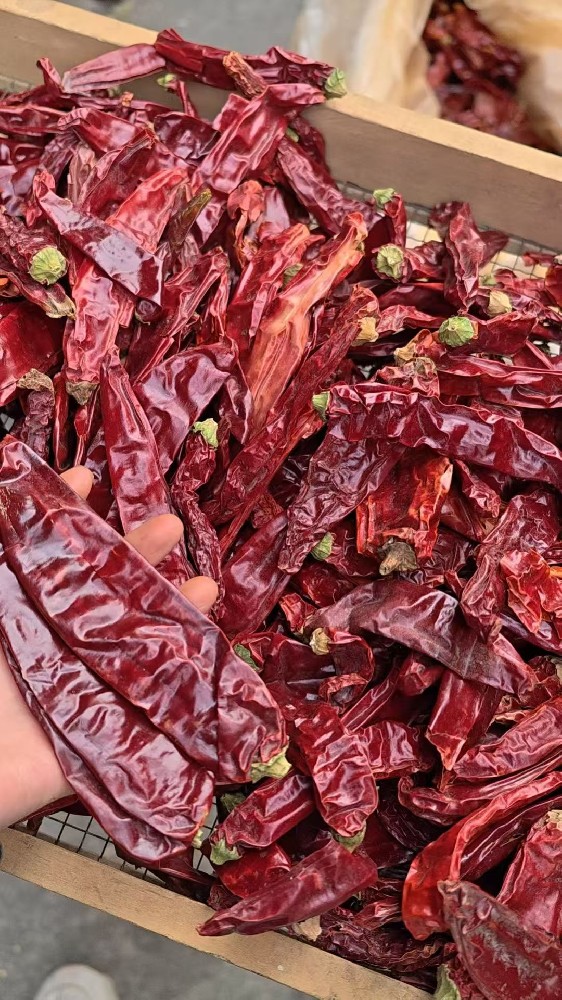
Pod length is a measurable size range for whole dried chili, not a casual word such as “long” or “large.” Write the range in centimetres, say whether that range includes the stem, and add a maximum percentage of pods that may fall outside the range, then approve a sample of the same Beijing Red or Red Dragon 23 form you will buy. A length term belongs on whole pods. Crushed chili, flakes and powder are specified by mesh or cut size, not by the length of the original pod.

What does a pod-length figure actually describe?
It describes how long the whole pods are, from an agreed starting point to the tip. If the goods are stem-on, say whether the centimetres include the stem and calyx or start at the shoulder of the fruit. The same Red Dragon 23 pod will read longer with the stem included than after the stem is removed, so the measuring basis has to match the form you are buying. The stem-on versus stem-removed note for Red Dragon 23 is the place to fix that form; the length range should be written on the same basis.
Agree the method on the approved sample and use it again on the shipment. A dried pod may be curved or slightly wrinkled; measure it as it lies, do not stretch it straight to make it fit the range. Length is not a colour or heat result. Short pods can still return a high ASTA value, and a long, glossy pod does not tell you the SHU, as the ASTA colour and SHU heat inquiry notes already explain.
How should pod length be written in the inquiry?
“Long pods,” “large size” or “regular grade” cannot be checked when a bag is opened. The table below is a writing checklist, not a published length specification for Beijing Red or Red Dragon 23.
| Field | What to write | Why it matters |
|---|---|---|
| Length range | A testable range in centimetres, for example “8–12 cm” | A descriptive word cannot be accepted or rejected at arrival |
| Stem basis | Whether the range includes the stem, and whether the goods are stem-on or stemless | The same pod measures differently with the stem left on |
| Out-of-range allowance | A maximum percentage by weight shorter or longer than the range | Some variation is normal; a range with no allowance is hard to apply to a bag draw |
| Variety and form | A separate range for Beijing Red and for Red Dragon 23, written for whole pods only | Do not copy one variety’s range onto the other, or onto crushed chili, flakes or powder |
ChangFengAgro’s published sheets for other whole-chili lines show how this field is written in practice: Chaotian and Yidu are listed at 5–7 cm, and Jinta at 8–13 cm with stems. Those figures belong to those varieties. They are not a default range for Beijing Red or Red Dragon 23. Write and approve a length range for the variety and stem condition you are actually buying. The colour, heat and form comparison already treats published figures for these two varieties as positioning, not as a lot guarantee; length should be handled the same way.
Why shouldn’t one variety’s length be copied onto another?
Because the range is a physical description of the pods in front of you, not a label that travels with the word “chili.” A buyer who copies Jinta’s 8–13 cm range onto Red Dragon 23, or Chaotian’s 5–7 cm range onto Beijing Red, has written a number that was never agreed for that variety. If the next offer comes from a new crop or a different origin, treat it as a new sample and check the length again, as in the crop year and origin note, rather than reusing last season’s centimetres.
When does pod length matter less than other specifications?
It matters most when the pods will be seen: whole-pod retail packs, hot-pot servings, or a chili oil in which segments stay visible, as discussed in the use-by-application article. For a grinding or crushing lot, mesh or cut size and seed content, moisture, colour and heat usually decide the purchase more than a tight length grade.
Keep length separate from defects. A broken piece is not a short variety; it is breakage, and it belongs in the visual grading limits as a maximum percentage by weight. Loose stems and foreign matter are a different clause again, as in the stems and foreign matter note. If you fold all of these into one word such as “Grade A,” neither side can say what failed on arrival.
Where should the length term appear after the inquiry?
In the specification and the contract, next to the variety and the stem condition. Pod length is a physical check against the approved sample, not a laboratory number in the same sense as ASTA or SHU, so it may not appear on the certificate of analysis unless you have asked for a size count to be reported. The sample approval note is the place to record the range you accepted; on arrival, compare a bag draw with the retain, as in the arrival-check note. If you also want photographs of opened bags before loading, say so in the inquiry so both sides are looking at the same lot.
FAQ
Can I use Jinta’s 8–13 cm range for Red Dragon 23 or Beijing Red?
No. That range comes from ChangFengAgro’s published Jinta sheet. Approve a sample of the variety you want, write its own length range and stem basis, and keep that range on the contract.
Does a length approval on whole pods cover crushed chili or powder of the same variety?
No. Once the pods are crushed, flaked or milled, the inquiry should state mesh or cut size and seed content, not pod length. Approve that form separately.
About ChangFengAgro
ChangFengAgro is a chili and spice supplier in Jiaozhou, Shandong, China, supplying Beijing Red and Red Dragon 23 dried chili, crushed chili, chili powder, paprika and other spices to food manufacturers, importers and private-label buyers. When you send an inquiry for whole pods, include the variety, stem-on or stemless, the length range and measuring basis, and the other limits you will run. Email [email protected] or WhatsApp +86-13355329772.